writing
Writing at Sutton Road Primary School and Nursery
At Sutton Road Primary School and Nursery, we believe that writing is essential for success across the curriculum and beyond school. Writing helps children to think, learn, communicate ideas and express themselves clearly and creatively. Our aim is for every child to become a confident, fluent and motivated writer, equipped with the skills they need for secondary school and later life.
We carefully design our writing curriculum to ensure high expectations for all pupils, including those who need additional support. Writing is taught systematically and progressively from Reception to Year 6 so that children build secure foundations and develop increasing independence.

Our Approach to Teaching Writing
Writing is taught through two closely linked strands:
-
Transcription – handwriting and spelling
-
Composition – generating ideas, constructing sentences and structuring whole texts
Both strands are taught explicitly and revisited regularly so that children develop automaticity and confidence, allowing them to focus on meaning and quality in their writing.
Spoken Language and Oral Composition
Spoken language underpins all writing. From the early years onwards, children are taught to talk in sentences, rehearse ideas orally and compose sentences out loud before writing them down. This supports vocabulary development, sentence structure and confidence, particularly while transcription skills are still developing.
Teachers model high-quality spoken language and provide structured opportunities for discussion, rehearsal and explanation to support writing across all year groups.
Handwriting and Spelling (Transcription)
Secure transcription skills are essential for fluent writing.
Handwriting
-
Handwriting is taught explicitly, regularly from the beginning of F2.
-
Children are taught correct posture, pencil grip and letter formation.
Practice is carefully sequenced to build fluency, accuracy and legibility over time.
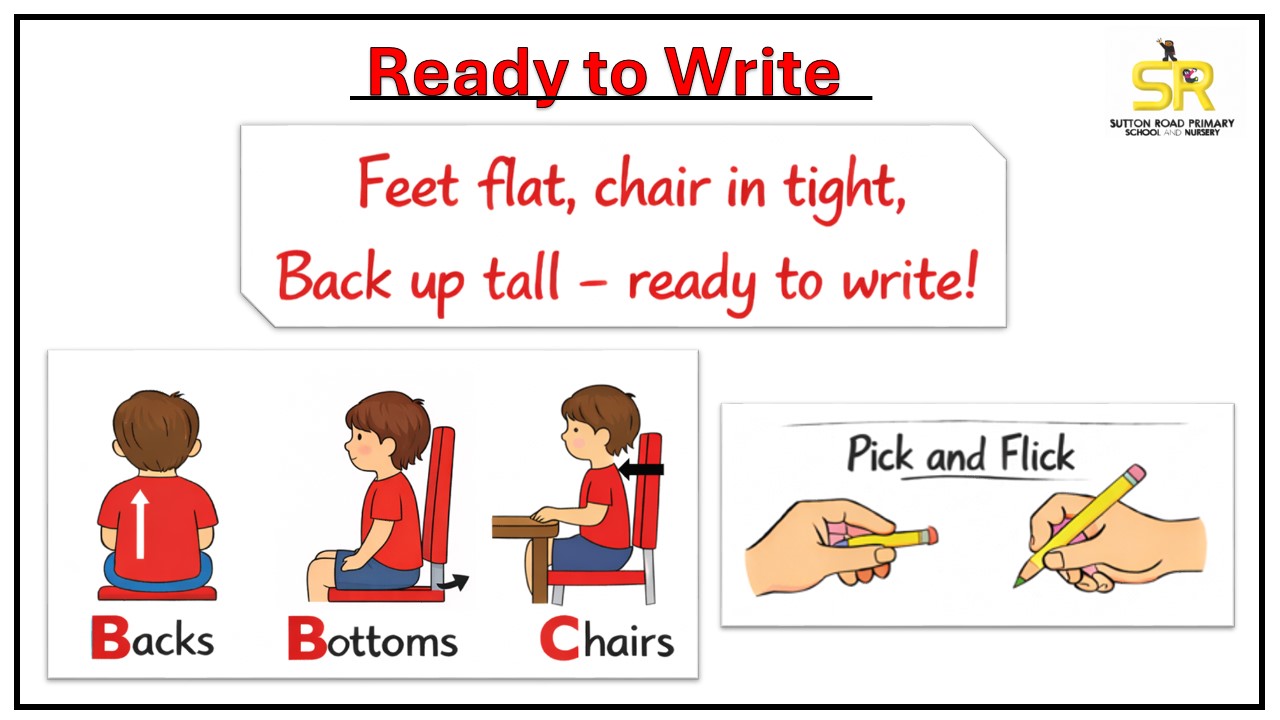
Pick and Flick - Left Hand
Pick and Flick - Right Hand
Click below to view our handwriting mantras
Spelling
-
Spelling is taught systematically, beginning with phonics in Reception and Key Stage 1 through phonics sessions.
-
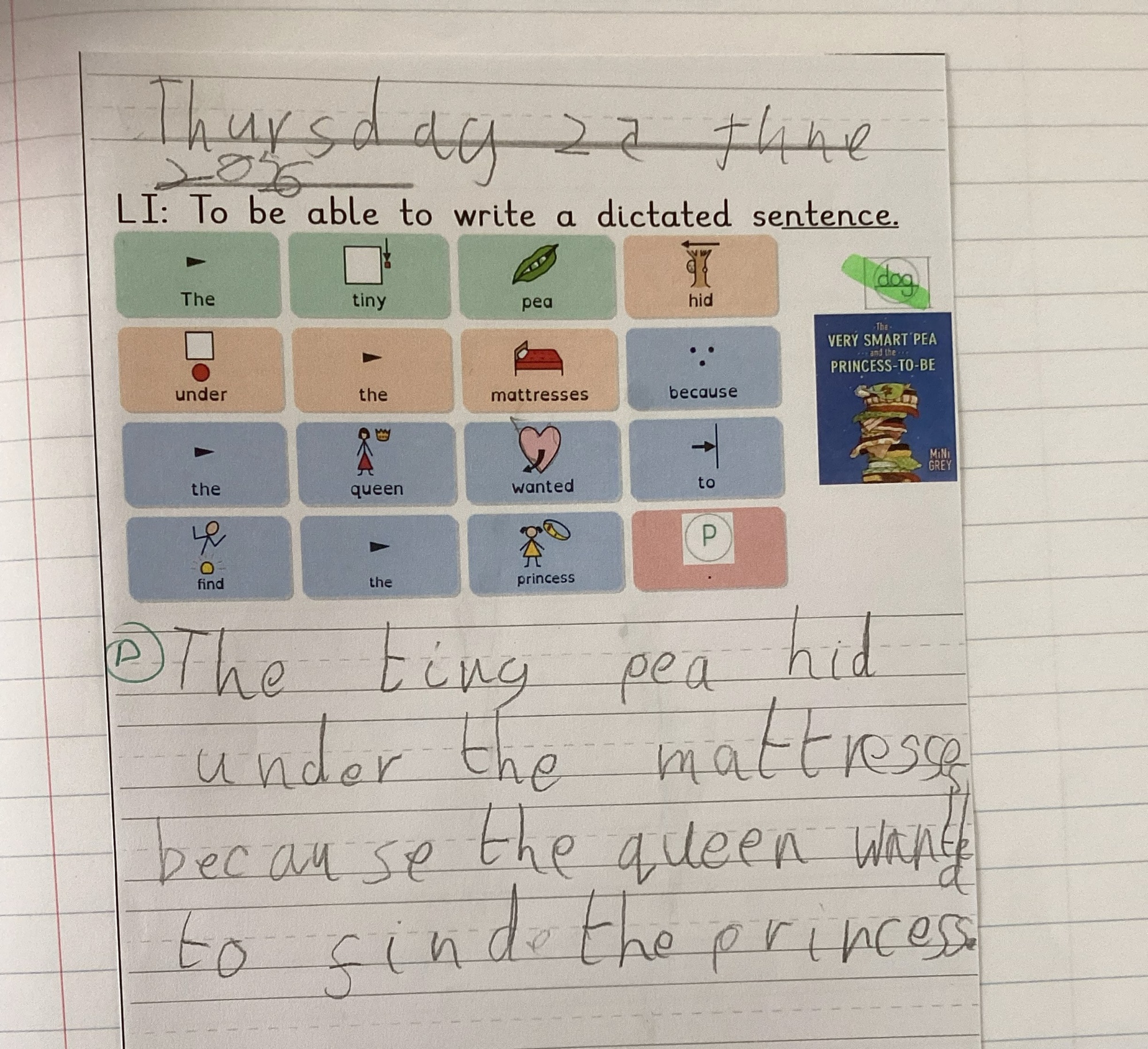
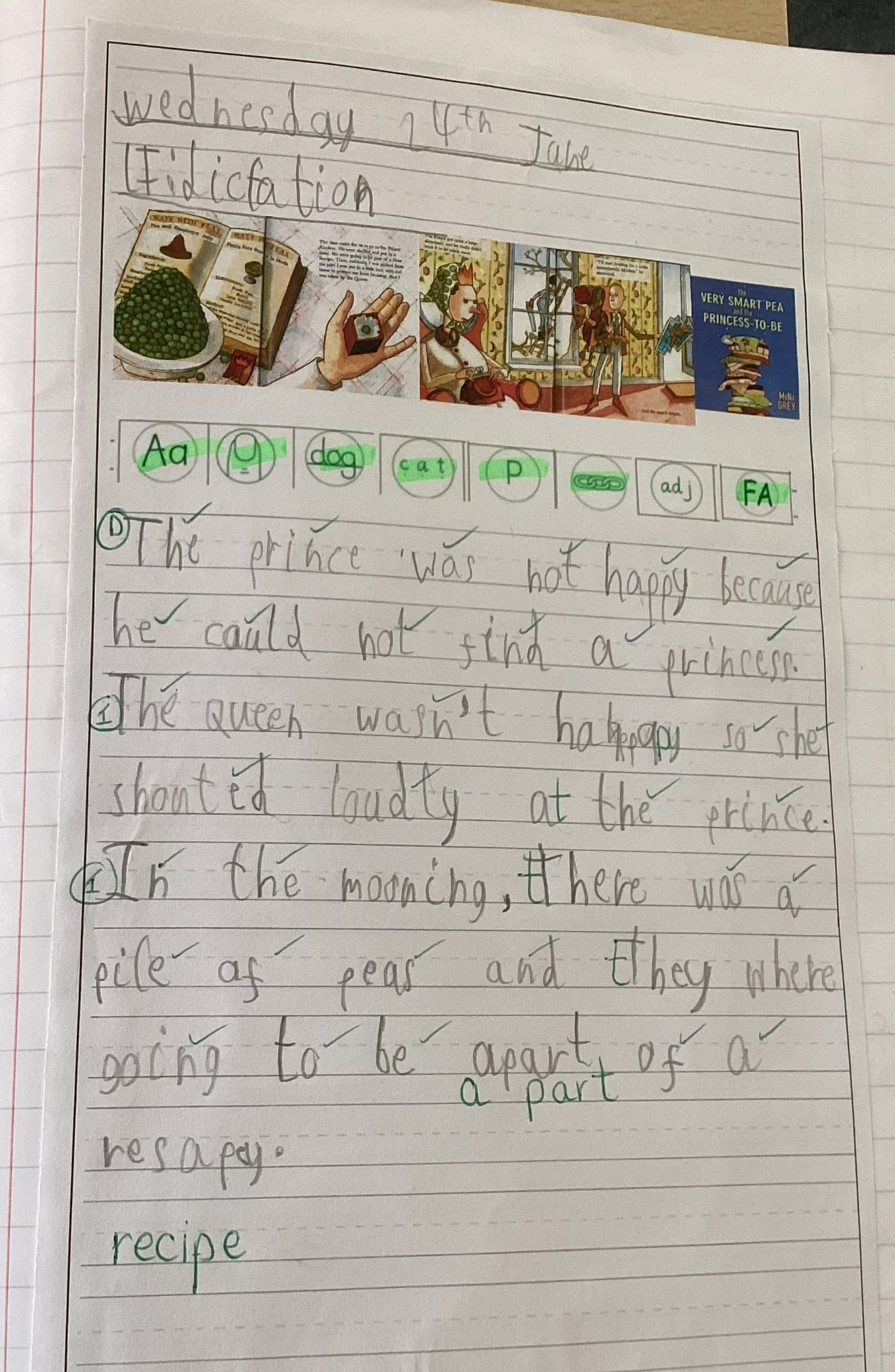
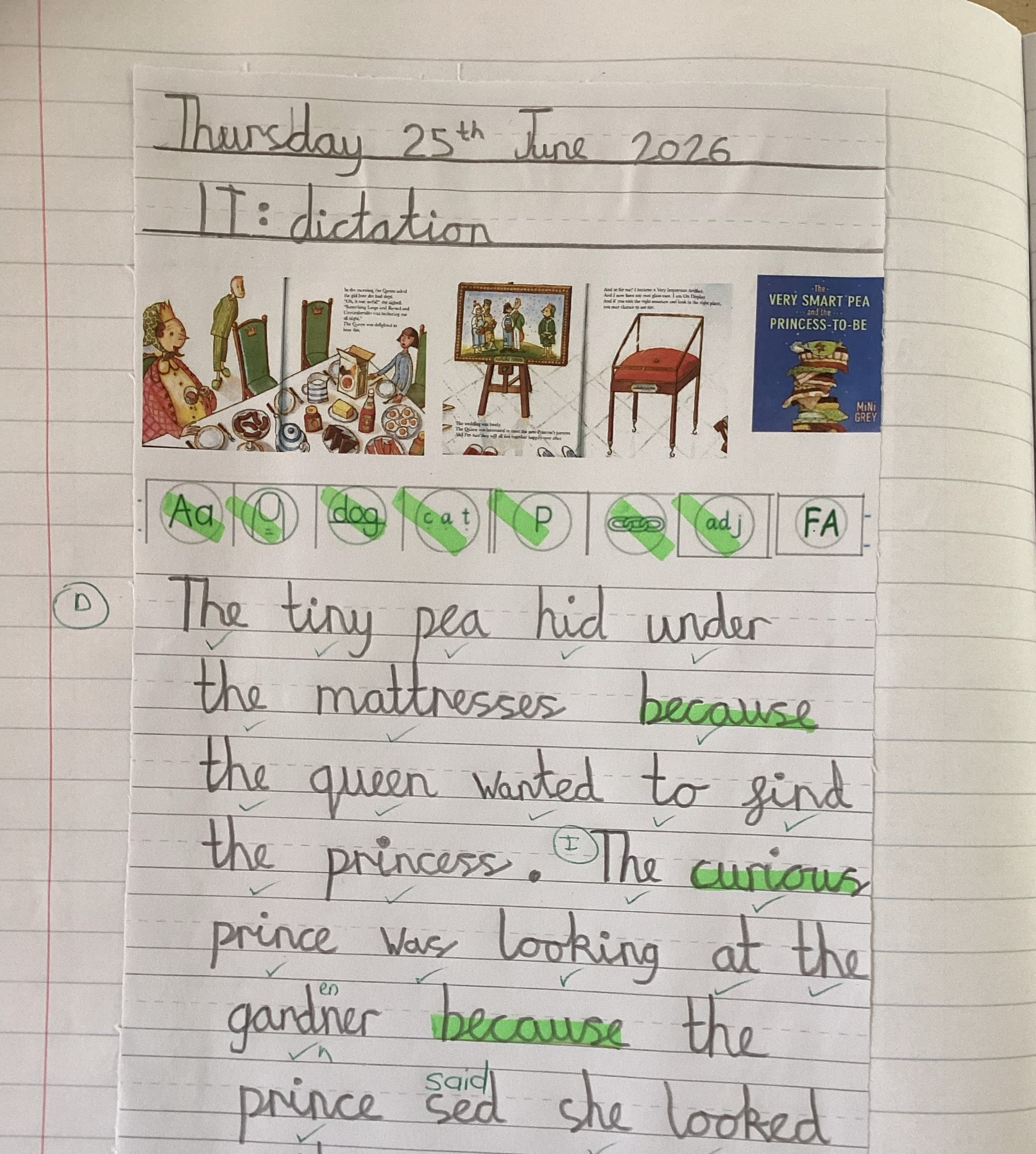
Children regularly practise spelling through dictation, allowing them to apply what they have been taught.
-
As children progress, they develop understanding of spelling patterns, rules and word structure to support accurate spelling in their independent writing.
By securing handwriting and spelling early, children are able to write more fluently and focus their attention on composing and improving their ideas.
Sentence-Level Teaching, Grammar and Vocabulary
Sentence construction is at the heart of our writing curriculum. Children are taught how sentences work and how they can be shaped to convey meaning effectively.
-
Grammar and punctuation are taught in context, as tools for communication rather than isolated rules.
-
Teachers explicitly model high-quality writing using WAGOLLs (What A Good One Looks Like).
-
Children are taught age-appropriate grammar skills, supported by Rainbow Grammar, and are given frequent opportunities to apply these skills in their own writing.
-
Vocabulary is carefully developed so that children can express ideas clearly, precisely and creatively.
The Writing Process
Children are taught that writing is a process. Across the school, they learn how to:
-
Plan ideas and organise content
-
Draft writing using taught structures and models
-
Revise and improve content and word choices
-
Edit for spelling, punctuation and grammar
-
Share and celebrate finished pieces
Editing and revising are an integral part of writing. Children reflect on their work, identify successes and make improvements, helping them to develop independence and pride in their writing.
Purposeful and Motivating Writing
Writing tasks are meaningful, engaging and linked to high-quality texts and curriculum learning. Children write for a range of purposes and audiences, helping them to understand why writing matters and how it can be used in real-life contexts.
Writing outcomes are valued and celebrated through displays, shared work and published pieces, building confidence and motivation.
Writing Across the Curriculum
Children write in a range of subjects, drawing on the knowledge they have learned to support content-rich, purposeful writing. This helps children to deepen their understanding while applying their writing skills in different contexts.
Supporting All Writers
We have high expectations for all pupils. Children who need additional support are identified quickly and supported through:
-
Clear scaffolding and modelling
-
Dictated sentences
-
Small-step teaching and additional practice
-
Pre-teaching and post-teaching where needed
-
Appropriate adaptations for pupils with SEND
Teachers use ongoing assessment and regular moderation within school, across the collaboration and within the trust to ensure consistency, accuracy and high standards.
Impact
Children’s writing across the school demonstrates clear progression in sentence construction and composition. Pupils are confident in expressing their ideas and are well prepared to meet the demands of the secondary curriculum.